Blog9 September 2026

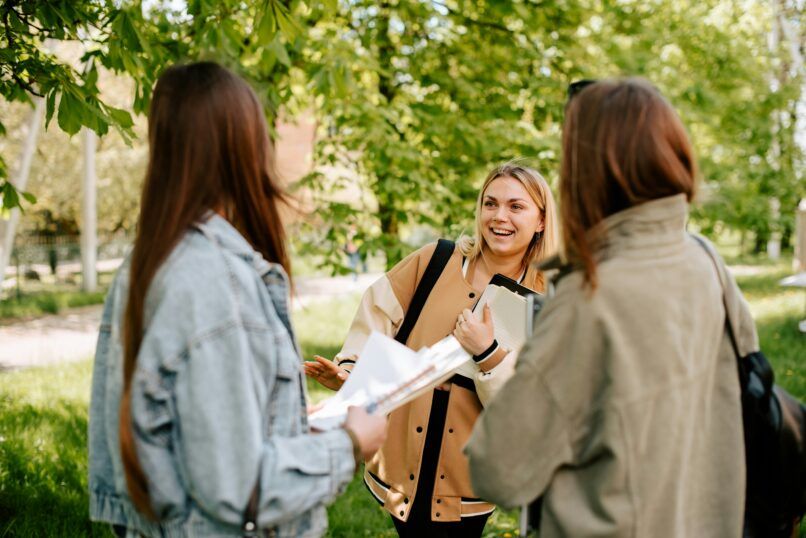
Student ambassadors are a familiar feature of widening participation work. When I was a widening-participation practitioner, they were a vital part of our events. Their responsibilities ranged from leading campus tours and answering questions to delivering subject workshops and academic tutoring. Without student ambassadors, many of our programmes wouldn’t have been possible.
It was clear to me that ambassadors were a positive addition to these activities. Time and time again, feedback forms showed that speaking with current students was often pupils’ favourite and most useful part of the event. Pupils often described ambassadors as ‘role models’, even when their only interaction with ambassadors was a 30-minute campus tour.
While there is emerging evidence that role model interventions have a positive impact on pupil aspirations, existing research largely relates to more intensive interventions such as counselling or mentoring, where a role modelling relationship can develop over multiple sessions. I therefore decided to explore this as part of my master’s research: how could student ambassadors establish themselves as role models over a much shorter timeframe?
I used observations and narrative interviews with student ambassadors, followed by thematic analysis of my notes and transcripts. The study was small and context-specific so findings aren’t generalisable, but it has nevertheless changed the way I think about student ambassadors.
Who holds the power?
As part of my research, I started reflecting on the power imbalances inherent in widening-participation activity. My role as a staff member placed me in a position of authority over the pupils. In some ways, that power imbalance was useful – it gave me credibility when I provided advice and guidance, and made it easier for me to manage pupil behaviour when needed.
While ambassadors play a very different role, they are not free from power imbalances. They are older and more mature than the pupils they work with, and they represent the university as paid workers. The ambassadors in my research were very aware of this imbalance, but, unlike me, they found their elevated status actively unhelpful. One described being called an “idol” by a group of pupils and said this made it harder to build a relationship with them.
Rather than accepting this hierarchy, the ambassadors tried to dismantle it. For them, being perceived as equal peers was an important part of becoming attainable role models. In their interviews, they talked about avoiding “top-down” interactions and instead speaking to pupils ‘normally’ and ‘casually’. In their view, breaking down these power dynamics made them seem more accessible to the pupils, and made the pupils feel more comfortable around them.
Power is shaped by the environment
However, ambassadors cannot dismantle these power dynamics alone. My research suggested that the structure of an event can either support or undermine their efforts. One of the events I observed provides a useful example. A formal panel Q&A had been planned, but a last-minute change led to ambassadors and pupils sitting together around a table instead.
The change created a completely different atmosphere. With staff less involved in the interaction, the ambassadors’ responses appeared more candid than they had in the panel format, and the students asked different questions. The ambassadors picked up on the difference too. One described how the roundtable format broke down the distinction between university students and sixth form students and instead felt like ‘people having a conversation’.
Campus tours created similar opportunities. Walking together in small groups, away from staff members, ambassadors interacted in a more relaxed way with pupils, sharing jokes and chatting informally.This suggests that the effectiveness of student ambassadors does not depend solely on the ambassadors themselves, but also on the environments that we create for them to interact with pupils.
What does this mean for practice?
For me, there are two main implications.
First, we could think differently about ambassador training. The training given to ambassadors at this university focused on conduct, safeguarding, and expectations. These things matter, but training could also prepare ambassadors for the relational side of the role: recognising power dynamics, sharing their experiences effectively, and thinking about how students might perceive their position.
Second, the design of activities should consider the nature of interactions as well as content. A panel Q&A, presentation, and campus tour might all provide pupils with similar information, but they don’t necessarily create the conditions for relationships to develop. How an activity is structured can therefore be just as important as what information it provides.
Overall, student ambassadors can be effective role models because they can challenge the hierarchy between themselves and pupils, making higher education feel more accessible in the process. As practitioners, our role is not just to recruit the right ambassadors, but to create an environment that allows these relationships to flourish.
Learn about the evidence on role model interventions on our evidence toolkit page.