Blog15 July 2026
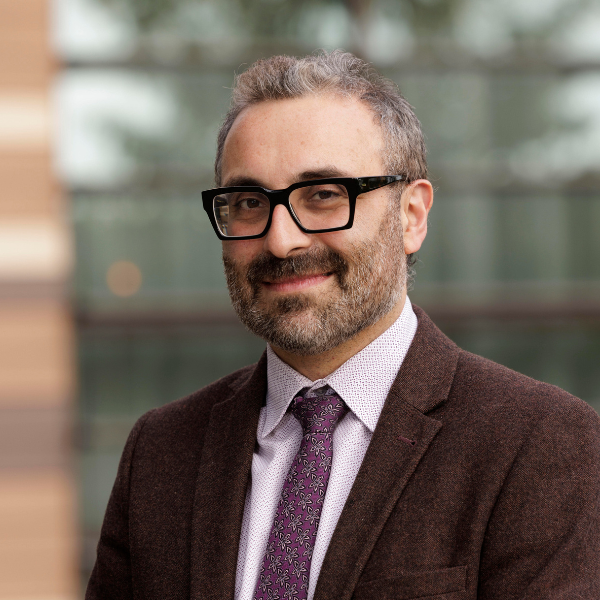
It’s been just over six years since I joined TASO as our first chief executive, amid a global pandemic. Since then, much has changed within TASO, in the UK and globally, and in the higher education sector. Now is a good time for us to reflect and learn from our work to date, and to adapt to an external environment where higher education faces increasing challenges and where the student experience has changed dramatically.
Learning from progress and challenges
TASO aims to eliminate equality gaps in higher education. We do this in two core ways. First, by upskilling universities and colleges to better understand if their work to improve equality of opportunity is having an impact. Second, by commissioning projects in partnership with these institutions to expand the evidence base on what works to improve access and student outcomes.
As part of this work, I’m proud to say that over the last six years we’ve produced dozens of guidance materials, research reports and evidence pages for our evidence toolkit, engaged with thousands of people across the higher education sector, and worked directly with scores of providers. We have seen a real shift in the standard of evaluations being conducted, as showcased in sector presentations and posters at our annual conference earlier this year.
While much progress has been made, it’s right and timely to reflect on how TASO can work most effectively with the sector to ensure we’re delivering on our vision and mission. One challenge we have faced is that many programmes have not been run as intended. Like in any industry, even the best-laid plans with stable and secure resourcing often need to be adapted when they encounter the realities of delivery – whether that’s a university access programme in England or a healthcare trial in Tanzania.
But this can make our work more complex. If a university outreach or student success programme does not run as intended, this can impact our ability to evaluate it. Because the methods we use to conduct evaluations — theories of change, qualitative studies or randomised controlled trials – are based on the proposed design of the interventions being assessed, implementation issues can become evaluation issues, whatever our method.
In light of this challenge, we are proposing to adapt our approach to delivering evaluation projects. Rather than issuing a tender and moving immediately to full-scale evaluations – as we have done to date – we are going to slow down the process by building in more time for scoping, and work with providers for a longer period before moving into evaluation delivery. This is common practice in other What Works Centres, and responds to feedback we’ve received from university partners and external evaluators. This shift in planning and timescales will help us identify implementation issues early on, and allow us to adapt research methods if needed as we learn what’s feasible. The next year will be a transition period, as we roll out this new approach.
Bursaries as a priority
Alongside adapting how we commission evaluations, we’ve been reflecting on our topics for commissioning in the year ahead. Thank you to those who have responded to our survey regarding our research areas of interest – this will help guide our future research. While we’re still gathering feedback from this consultation, which will inform our work in 2027 and beyond, we will be focusing the majority of our commissioned work this year on bursaries.
This choice has been driven by several factors. Our evidence toolkit shows that financial support has promising results, but evidence is more limited in the UK context. There is also less evidence about how financial support is best delivered. We know from our many colleagues that cost of living pressures are making the effective delivery of bursaries even more important, and that providers have been adapting their practice over the past few years in response.
This means there are widespread opportunities to assess how recent changes in bursaries have impacted students. The next 12 month period is, in some ways, a transition year for us, with an aim to deliver a few backward-looking quasi-experiments in autumn 2026 on a shorter timescale. This shorter timescale is feasible as we will be working with partners to evaluate changes that providers have taken in recent years to determine which form of bursary delivery is most impactful for students.
In the autumn, we are also planning to implement our shift to longer-term commissioning. We will open an additional call to work with providers on scoping how they might evaluate their bursaries, and outline how our future commissioning will be informed by the sector’s research interests. Keep an eye out over the coming weeks for more information on these upcoming projects, which represent a new way for both us and the sector to work.
Building shared evidence across the sector
The other major development in the coming year will be the launch of the Higher Education Evaluation Library (HEEL), which we are developing with the Higher Education Access Tracker (HEAT).
Peer learning and support for the sector has been central to our activities from the outset. With the HEEL, these opportunities will amplify considerably. Once the library is sufficiently populated, we will seek to analyse the findings, outline common themes, evaluation challenges and possible future projects, and inform our evidence toolkit. This thinking will also feed into our work on standards of evidence and how we assess the quality of different research methods.
Continuing our mission
Ultimately our aim is to improve policy and practice so that higher education better addresses inequalities that students continue to experience. In the year ahead, we are adapting so that this aim is more likely to be achieved, and look forward to working with many of you to make this happen.